
Download a free or trial version today
 |
Baselight for macOS is a complete grading and finishing solution providing powerful, fully-featured Baselight on the Apple macOS platform. |
|
 |
 |
 |
| Free Licence | Free Licence | 14-Day Trial |
| 30-Day Trial | 3-Month Subscription | |
| Annual Subscription | Annual Subscription |
Baselight S |
Baselight ONE |
Baselight TWO |
Baselight X |
| Software-only on Apple macOS |
1x render GPU + 1x UI GPU |
2x render GPU + 1x UI GPU |
6x render GPU + 1x UI GPU |
| Baselight S: Full grading features without advanced collaboration tools Baselight M: Includes multi-user interconnectivity |
15.3TB NVMe SSD cache Optional 360TB RAID 60 storage | 2/4/8x 15.3TB Data Centre PCIe 4.0 NVMe SSD giving 30.7/61.4/122.9TB cache High performance software RAID option for NVMe SSDs: RAID 5 for 8 drives providing 107.7TB or RAID 6 for 16 drives providing 215TB |
|
 |
 |
||
| See the Baselight for macOS datasheet for a full feature comparison. | For a full list of storage options, see the Baselight ONE datasheet. |
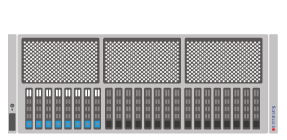
Totally flexible 8th generation system can be easily upgraded from Baselight TWO to a full Baselight X system within the same chassis. See the Baselight TWO/X Gen VIII datasheet for full details. | |
Flexible, professional grading and finishing

Baselight for macOS is a complete grading and finishing solution providing powerful, fully-featured Baselight on the Apple macOS platform.
It offers the same advanced features as high-end Baselight Linux systems yet is optimised for the latest Apple Silicon macOS platforms. Available through two flexible subscription options, it addresses the current needs of modern workflows.
There are two Baselight for macOS products.
- Baselight S is a budget-friendly option for the single freelancer, with full grading features but without advanced collaboration tools.
Baselight S provides support for the Slate control surface as well as third party-panels, and allows rendering from a local render queue. - Baselight M is designed for facilities that require multi-user interconnectivity, such as with Baselight CONFORM and Baselight ASSIST.
On top of the interconnectivity features, Baselight M also supports the Blackboard Classic panel.
If your job requirements grow, you can easily upgrade from Baselight S to Baselight M. See the Baselight for macOS Datasheet for a full rundown of the differences between the two products.

Related Links
Baselight for macOS Datasheet (Chinese)
Watch
Introduction to Baselight
Part of the free online Baselight Learning Programme
System Requirements
Recommended Mac specification
- Supported on macOS 13-15
- Apple Silicon Mac Studio or Mac Pro*
- 64GB or greater unified memory
- 1TB or greater internal storage
- External fast Thunderbolt NVMe enterprise SSD with 8TB or greater reserved for cache.
Large internal Apple NVMe SSD storage can be utilised for Baselight’s cache; however, this may exhibit a limited life span and is difficult to replace.
* Baselight for macOS is supported on Intel Macs and lower specification Apple Silicon systems; however, this is not the recommended configuration.
Recommended options
- External high-performance image storage disk system
- SDI video monitoring (for higher playback performance)
- Supported devices include:
AJA: Kona, Io4k/Plus, T-Tap/Pro
BMD: Ultrastudio Mini/HD/4k, Decklink 8k Pro - 10/25/100GbE connection to other Baselight systems or FLUX Store
Related Links
Baselight for macOS Datasheet (Chinese)
Watch
Introduction to Baselight
Part of the free online Baselight Learning Programme
High quality, cost-effective grading and finishing
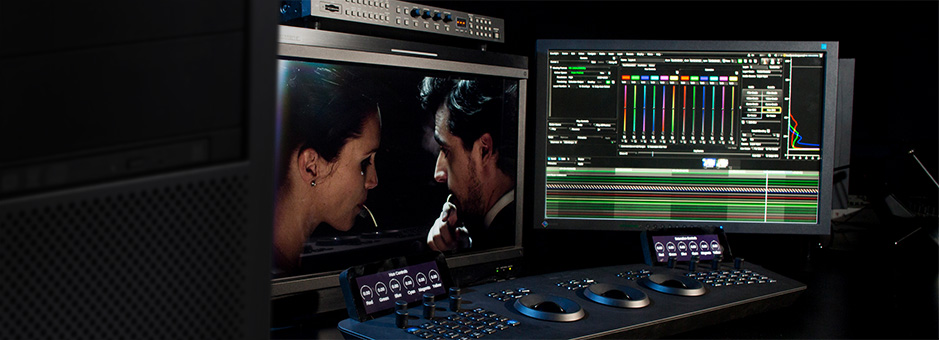
Baselight ONE is a complete system providing a cost-effective solution for today’s grading and finishing requirements. It is based on a specifically-configured HP workstation and incorporates the same extensive software features found on the higher end Baselight systems.
The tower system is quiet enough to run deskside and comes in a diskless version with a high-performance 15.3TB NVMe SSD internal cache, which you can attach to your own or FilmLight-supplied centralised storage – such as FLUX Store, our high-speed media server. It is also available with the option of 360TB of external, high-speed RAID 60 storage.
For a full list of options, see the Baselight ONE datasheet.
Baselight ONE is designed to work perfectly with our world-renowned Slate, Blackboard Classic or Blackboard 2 control surfaces, which all combine style and performance with maximum control and ease of use. Built-in support is also provided for other control panels including Avid Artist Color and the Tangent Wave and Element panels.
Related Links
| Physical specifications | |
|---|---|
| Dimensions (WxHxD) | 444.5x215.9x551.2mm |
| Weight | 22.8kg (50.4lbs) |
| With disks | 29.2kg (64.3lbs) |
| Power consumption | 90-269V 12A @ 100 VAC |
| Heat output | 1.125kW (3838 BTU/hr) |
| Storage | |
|---|---|
| For a full list of storage options, see the Baselight ONE datasheet. | |
| Capacity | 24TB internal (optional) Up to 144TB high-performance external (optional) |
| RAID protection | Cache-protected RAID 5 (internal) High-speed RAID 60 (external) |
| Audio | |
|---|---|
| File formats | WAV, AIFF, compressed formats such as AFF |
| Sampling | 24bit, 48kHz |
| Output channels | 16-channel, 24-bit SDI embedded 8-channel, 24-bit HDMI embedded 16- or 8-channel, 24-bit AES/EBU 2-channel unbalanced phono analogue (optional) |
| Connectivity | |
|---|---|
| Connectivity | Dual 1/10GbE (RJ45) Ethernet (built-in); Dual 10GbE (SFP+) or Single/Dual 25/40 QSFP or 40/50/100 QSFP28 Ethernet (Optional PCIe card); SAN fibre channel (Optional PCIe card) |
| SDI/HDMI output | |
|---|---|
| Output | 1.5/3G-SDI, SMPTE-259/292/296/424 Single Link 4:2:2 or 4:4:4 Dual Link HD 4:4:4 4K/UltraHD 4:2:2 and 4:4:4 HDMI v2.0b, 30/36 bits/pixel, RGB or YUV, 2.25Gbps, SD, HD and UHD with support up to 60p DCI 2K and 4K HDR |
| Resolution | Up to 4K DCI |
| Frame rate | 23.98p-60p |
| Synchronisation | SDI (external) |
| User interface | |
|---|---|
| UI display | Up to three DVI/DisplayPort monitors |
| Control surface | Blackboard 2, Blackboard Classic or Slate Also supports Avid Artist Color and Tangent Wave and Element panels |
Expandable colour correction capability in a single platform
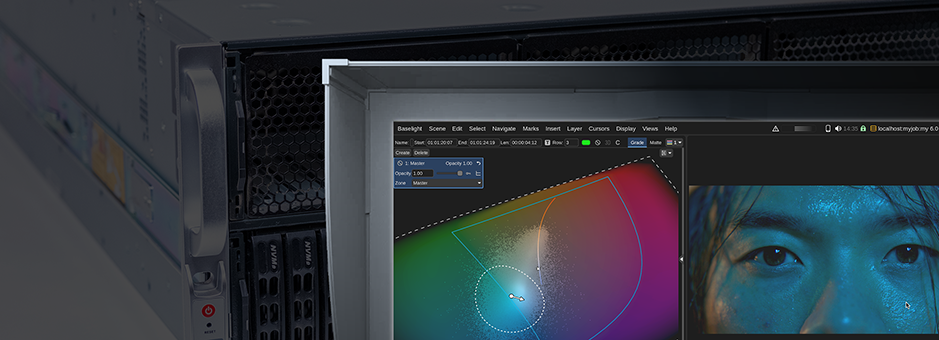
FilmLight has drawn on over 20 years of experience in developing dedicated Linux colour correction platforms to produce a totally flexible 8th generation Baselight TWO system. This system is unique, in that the same chassis can be easily upgraded to a full Baselight X system as your business requires.
Built around dual Intel® Xeon® Sapphire Rapids CPUs, the 4U data centre chassis is equipped with two Nvidia RTX 6000 Ada GPUs in a Baselight TWO system and six GPUs in a Baselight X configuration – together with up to 210TB of blisteringly fast NVMe SSD.
If you are running off centralised storage these drives can be configured as a maximum performance striped cache, or if the drives are to be used both as local bulk storage and cache, they can be configured as a high-performance software RAID.
The system supports up to three GUI monitors, and comes with a dedicated, suite-side control PC. It can also be supplied with our flagship control surface Blackboard 2, or Blackboard Classic or Slate.
Related Links
| Physical specifications | |
|---|---|
| Dimensions (WxHxD) | 437x737x178mm |
| Weight | 29.7kg (65.5 pounds) unpopulated |
| Power supply | 4x 2700W with Input 200 - 240Vac 2 + 2 Redundant |
| Storage | |
|---|---|
| Drives | 2/4/8x 15.3TB Data Centre PCIe 4.0 NVMe SSD |
| Capacity | 30.7TB / 61.4TB / 122.9TB |
| RAID protection | Optional software RAID 5 |
| Audio | |
|---|---|
| File formats | WAV, AIFF, compressed formats such as AFF |
| Sampling | 24bit, 48kHz |
| Output channels | 16-channel, 24-bit SDI embedded 8-channel, 24-bit HDMI embedded 16- or 8-channel, 24-bit AES/EBU 2-channel unbalanced phono analogue (optional) |
| Connectivity | |
|---|---|
| Connectivity | Dual 1/10GbE RJ45 Ethernet |
| SDI/HDMI output | |
|---|---|
| Output | 1.5/3G-SDI, SMPTE-259/292/296/424 Single Link 4:2:2 or 4:4:4 Dual Link HD 4:4:4 4K/UltraHD 4:2:2 and 4:4:4 HDMI v2.0b, 30/36 bits/pixel, RGB or YUV, 2.25Gbps, SD, HD and UHD with HFR support up to 120p DCI 2K and 4K; 8K support standard with Baselight X HDR |
| Resolution | Up to 8K DCI |
| Frame rate | 23.98p-120p |
| User interface | |
|---|---|
| Host processor | HP Z2 216x216x58mm 100-240V, 5A (Max @ 110V) |
| UI display | Up to three DVI/DisplayPort monitors |
| Control surface | Blackboard 2, Blackboard Classic or Slate Also supports Avid Artist Color and Tangent Wave and Element panels |
