




Meet The Colourist
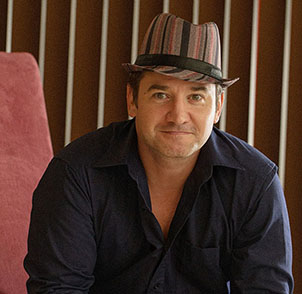
Andreas Brueckl
Supervising Colourist, Annapurna Studios, Hyderabad
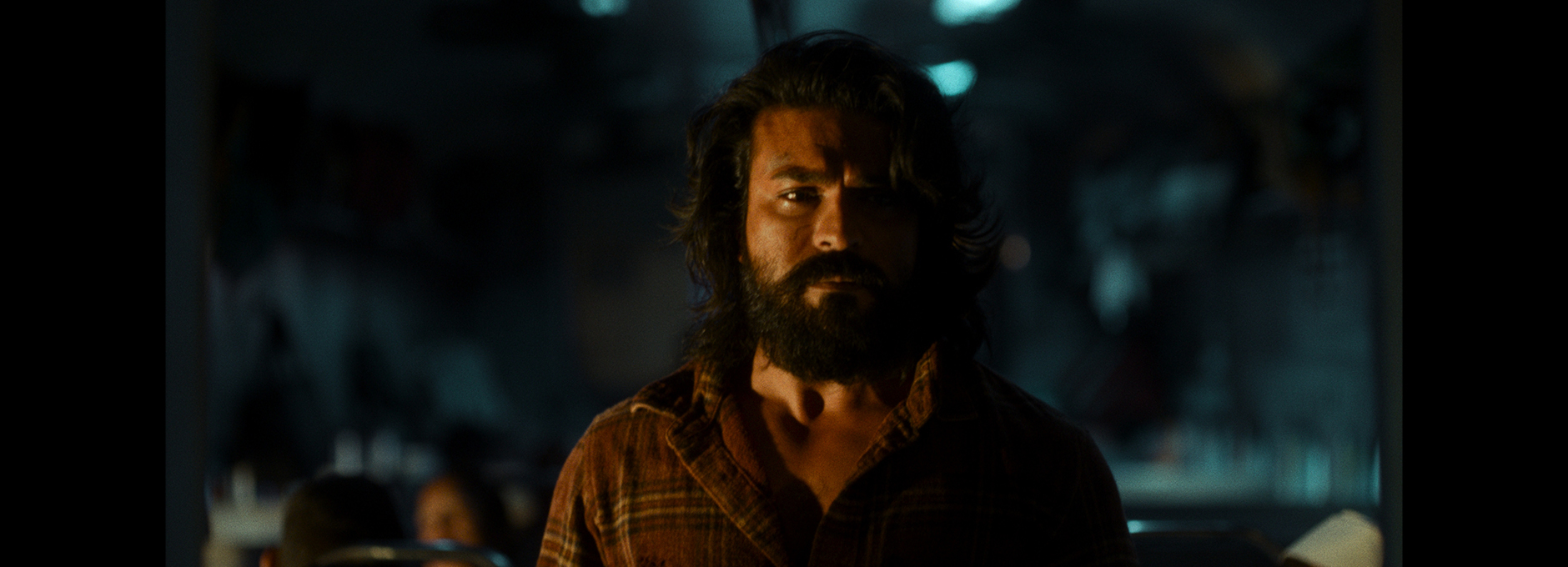
Andreas Brueckl officially joined Hyderabad’s Annapurna Studios as Supervising Colourist in January 2026. One of his first projects at the facility was the South Indian blockbuster Peddi, starring Ram Charan, who previously captured worldwide attention in the Oscar-winning epic RRR.
For Peddi Andreas collaborated with one of India’s most respected cinematographers, Rathnavelu ‘Randy’ (ISC). In this conversation, Brueckl discusses the scale of the South Indian film industry, his move to Annapurna Studios, and the complex technical artistry required to bring Peddi to the global screen.
First of all, how did you decide to make the move to the South of India?
The transition actually began back in December 2024. I was based in Mumbai at the time when my friend, the brilliant cinematographer Vijay Karthik, asked me to come down to Hyderabad - the heart of the South Indian industry - to work on his film Daaku Maharaaj. We had a great working relationship from our previous collaborations on the movies Doctor and Jailer.
For a couple of weeks, I was pulling double duty: grading my projects in Mumbai during the week and flying out Friday through Sunday to work at Annapurna Studios.
That experience really opened my eyes. Bollywood and the South Indian film industries operate on completely different planes. Scale-wise, the South is just massive. To give you some context, Peddi brought in a massive $48 million USD within its first 14 days alone. Another upcoming project of mine, Varanasi, has a production budget of around $140 million USD. The numbers speak for themselves; the market here is absolutely booming and has grown even bigger as Indian movies are watched increasingly worldwide.
During Daaku Maharaaj, Annapurna’s Studio Manager, CV Rao, approached me about making the move permanent. I already loved the city - Hyderabad is easily India’s most modern metropole and the team at Annapurna is top-notch. It’s always a major decision to relocate when you have a family. But after looking at where the industry was heading, we knew it was the right move.
Randy wanted me to work on his previous film, Devara, but I was fully booked in Mumbai at the time. A massive percentage of top-tier South Indian filmmakers prefer working at Annapurna Studios because of the infrastructure and the service culture. The moment Randy heard I was officially joining the studio, we reconnected instantly.
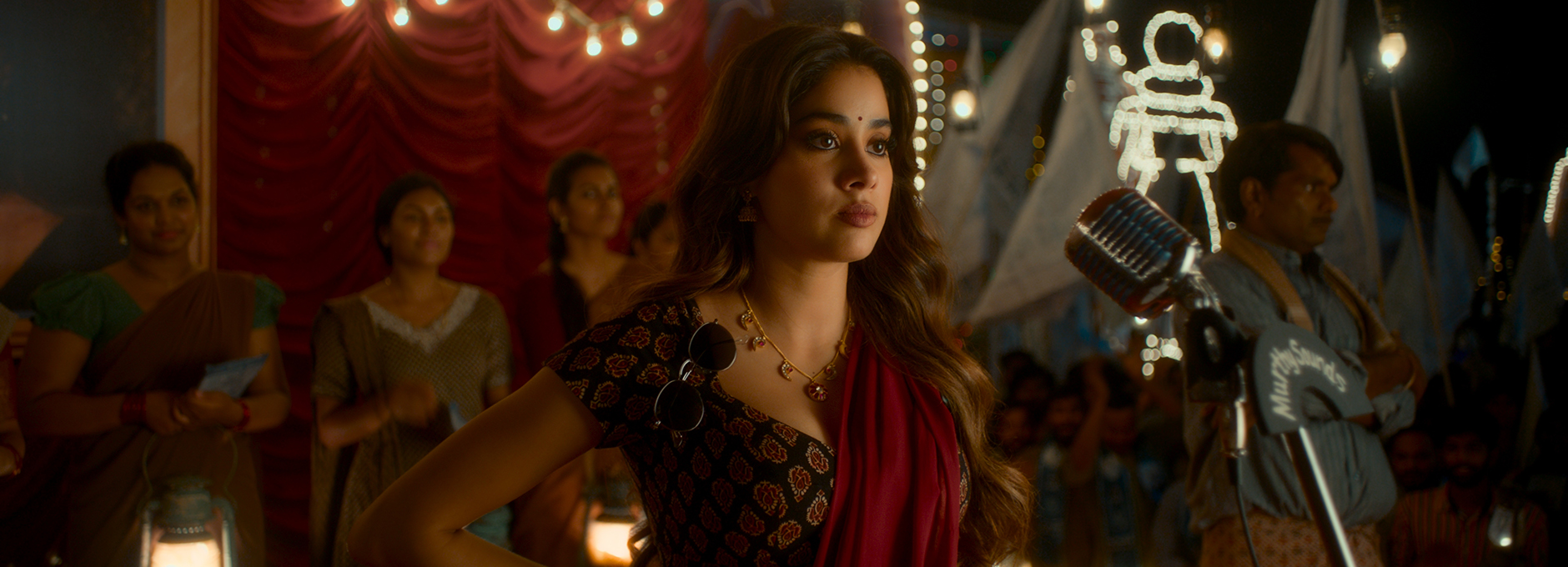
In fact, we started grading one of the film’s major musical numbers back in November, well before my official start date. In Indian cinema, a movie will often feature up to five major musical set pieces. They don't just generate massive pre-release hype; they are a critical pillar of the film’s revenue system. It’s a unique feeling when you jump into a cab in India and the songs from the movie you are currently grading are blasting on the radio.
Could you explain the hype around South Indian movies?
The energy when it comes to movie releases here is just crazy. For Peddi, we were doing city-to-city promotional events with crowds of up to 70,000 people. It’s a cultural celebration on the level of a rock concert.
What is your technical and creative approach when you start a new project?
It always depends on the timeline of the project. I’ve had films where I was brought in at the story bible stage to build look-books and visual concepts with the DoP before a single frame is shot. But that is rare. More commonly, a cinematographer calls me the moment they sign onto a project so we can start bouncing ideas back and forth.
On Peddi, Randy had already been shooting and developing the visuals for nearly two years. South Indian blockbusters of this magnitude are massive undertakings that routinely take two to three years to execute. Randy was shooting additional scenes and pick-ups until three weeks before the release date, which got pushed twice primarily due to the gargantuan VFX workload. We were dealing with over 2,500 VFX shots, including a massive 20-minute climax where the entire sports stadium was a full CG replacement.
Because of this, we were making minor adjustments down to the final days. I began grading solo in January, with Randy or his son Aadith (who was second unit camera) joining me in the suite whenever they had a break from the final shooting schedule.
My mantra is to never, ever work against the footage. My first mentor, Irmi Fischer, instilled that in me back when I started in Germany in 2005. I work within Baselight’s T-CAM colour management, building my contrast and texture directly into the timeline. I spend the first few days purely building what I call the ‘digital film stock’ - playing with things like the highlight roll-off, skin tones, mid-tone contrast, and shadow distribution. Once you crack that, the main challenge of the grade is already sorted.
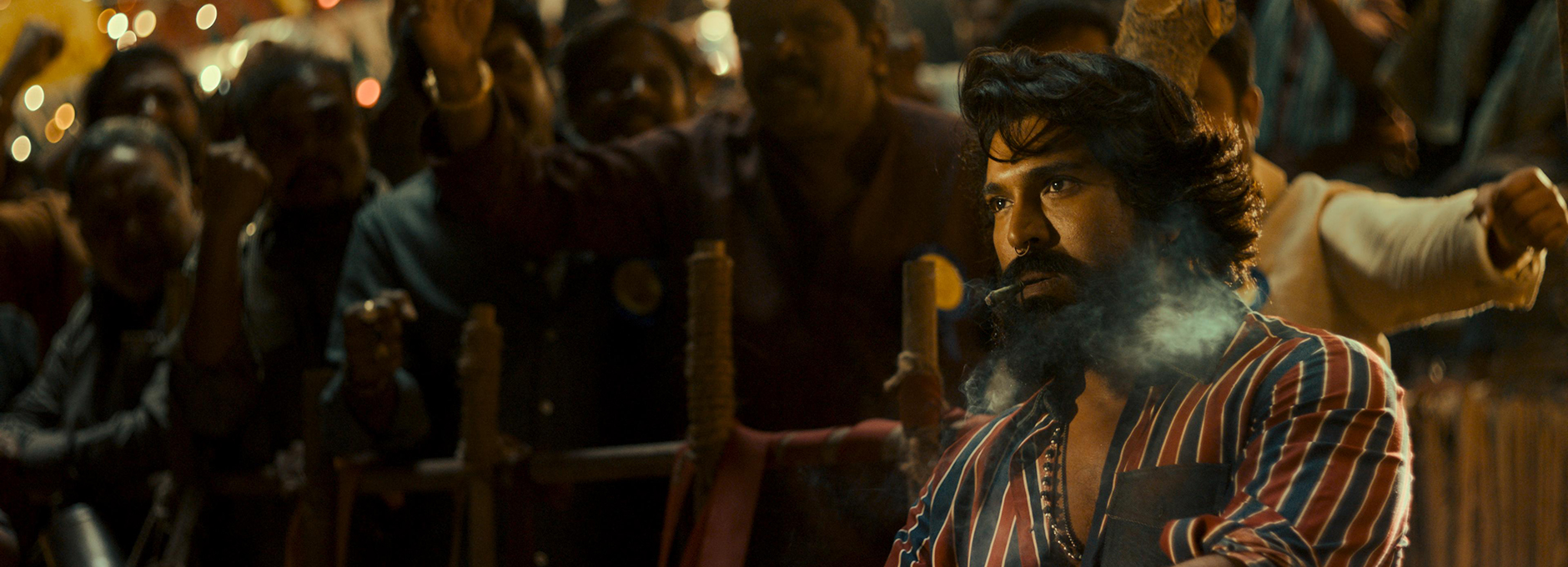
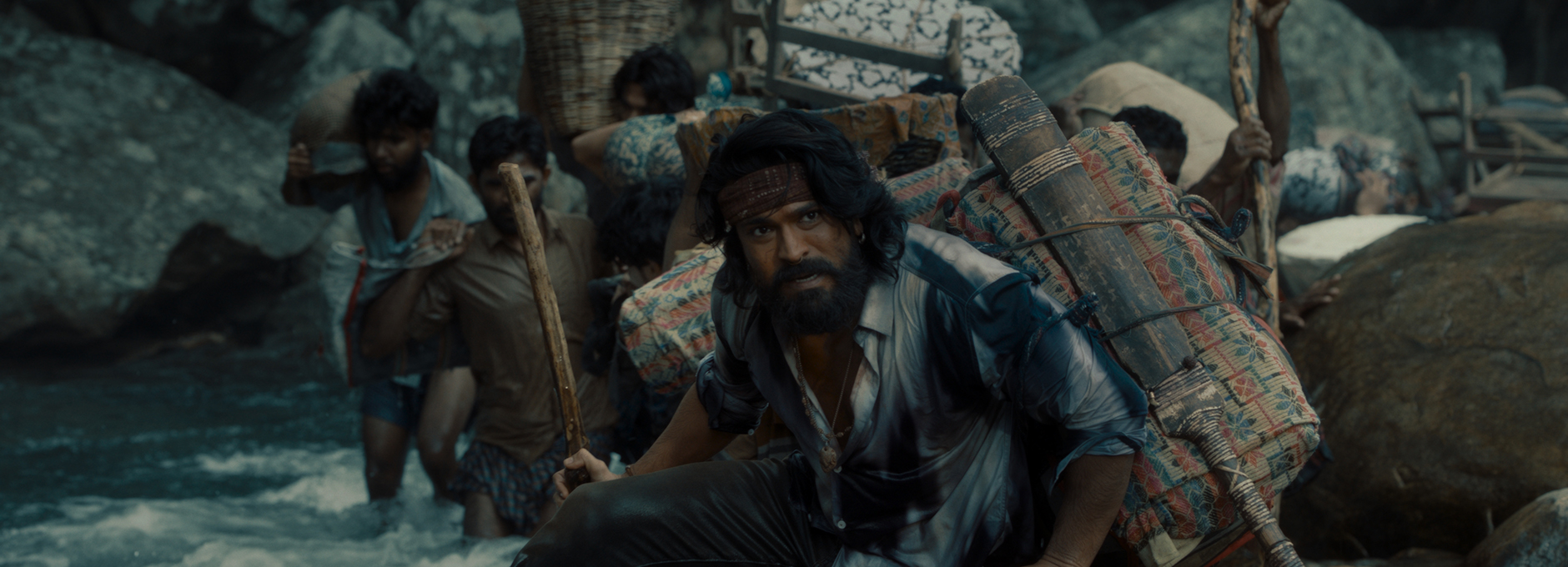
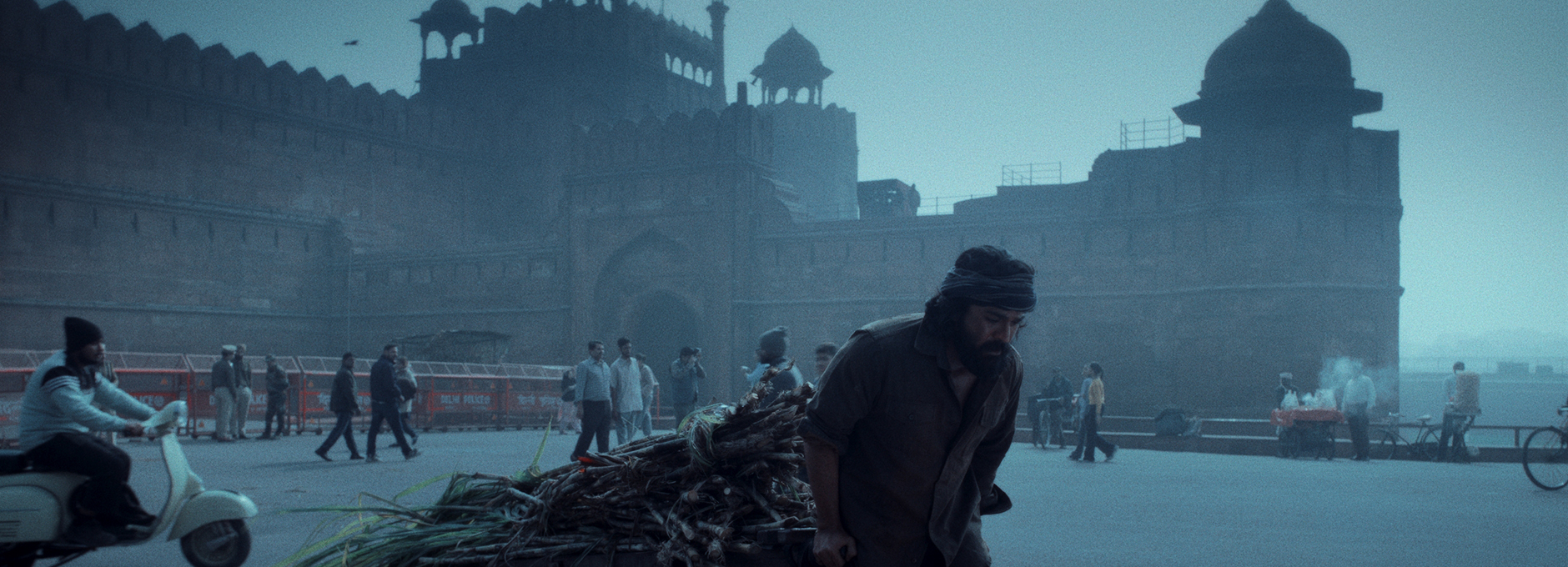
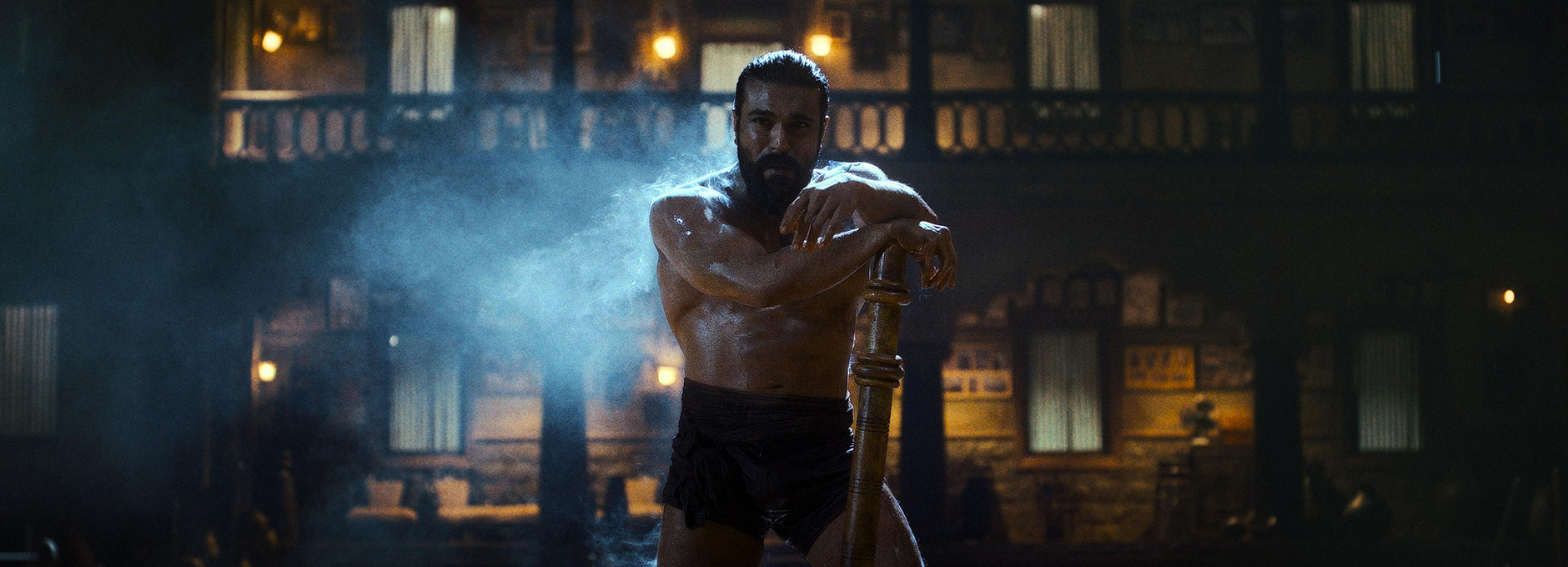
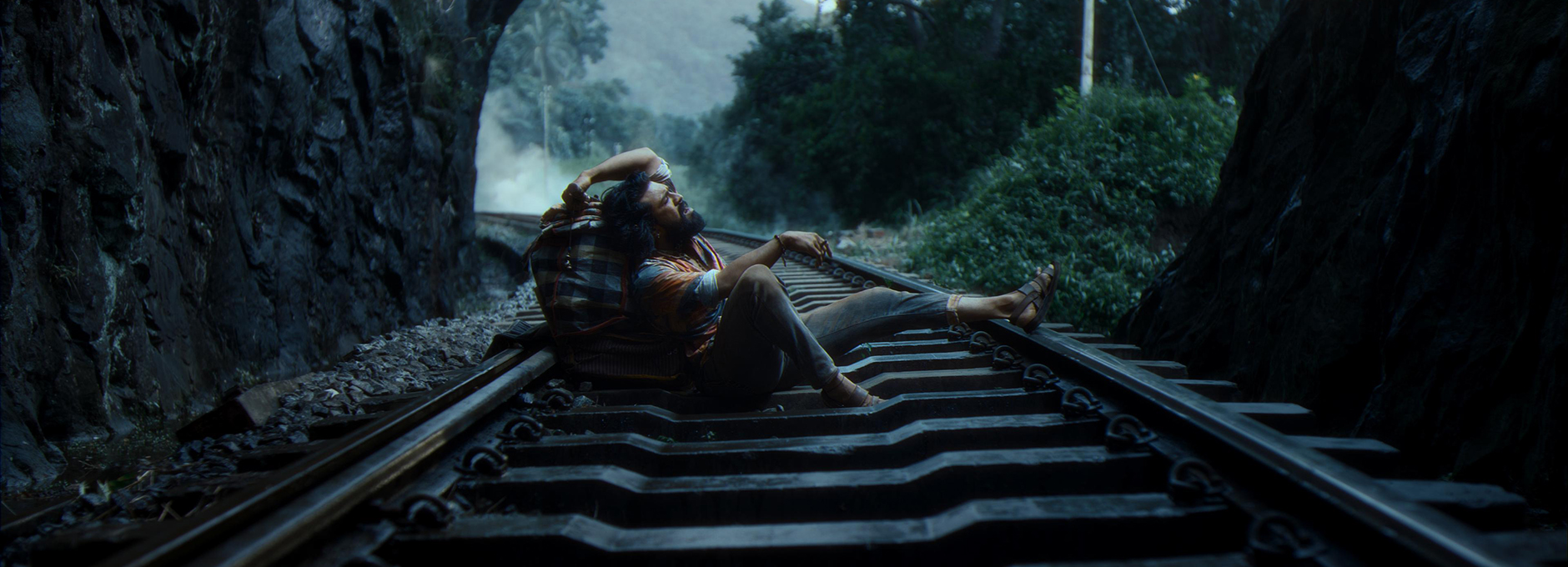
For Peddi, I created a base texture that unified all three timelines of the story, so we feel the same kind of density levels throughout. Once you have your digital film stock you basically do the rest in your Base Grade. Part of my stack involved a bit of Fuji Astia and the EARTH Look operator, which I completely rebuilt inside Chromogen to protect the highlights from bleaching out. I engineered a custom shadow roll-off that held the blacks just above absolute zero, compressing the upper blacks and mid-tones. This gave us incredibly dense, rich shadows without ever crashing the lower end. Then I added some subtle, cooler sub-tones into those mid-shadows.
For me good skin tones are the most important factor. I prefer the darker shades to have a richer saturation, shifting the hue slightly toward red to create more separation from brighter skin shades. This requires a lot of care in Indian cinema, where you are balancing a wide variety of diverse skin tones across the cast. I am constantly referencing the original RAW data to ensure we remain true to the OCF. Texture always comes first; the look follows.
If I ever feel my Look operators or Chromogen are too much I simply dial them back a bit.
As part of my texture I simulated Fotokem’s famous ‘DFD’ (Digital-Film-Digital) process within Baselight. This emulates the organic characteristics of printing digital RAW footage onto analogue film negative and scanning it back to digital - giving us beautiful halation, organic grain structure, and a bit of softness. The advantage of doing it in Baselight is that you have full control.
With a project of this scale, what stood out as your most challenging sequence?
Without question, a 12-minute cricket match sequence played on a rustic sandy pit. It was shot over the course of 15 days in every imaginable weather and lighting condition. A shot under an overcast white sky looks completely different from something shot an hour later under a deep blue sky. It required almost three weeks of matching. To make the sequence feel seamless, I had to isolate and break down every shot into four parts: the overall exposure, the ground/sand colour, the sky consistency, and then of course the skin tones.
To make it more complex, the crowd was waving vibrant red flags that came into the RAW footage with a near-neon intensity. Any contrast I added to the image made those flags completely overpower the frame. I used X Grade and also blended them back 50% to the RAW footage over a key to control them.
The VFX team added digital greenery to the backgrounds too, but they initially delivered a monochromatic, deep green that stuck out too much. I corrected most of them and sent the rest back to get re-rendered with a more natural, varied colour range.
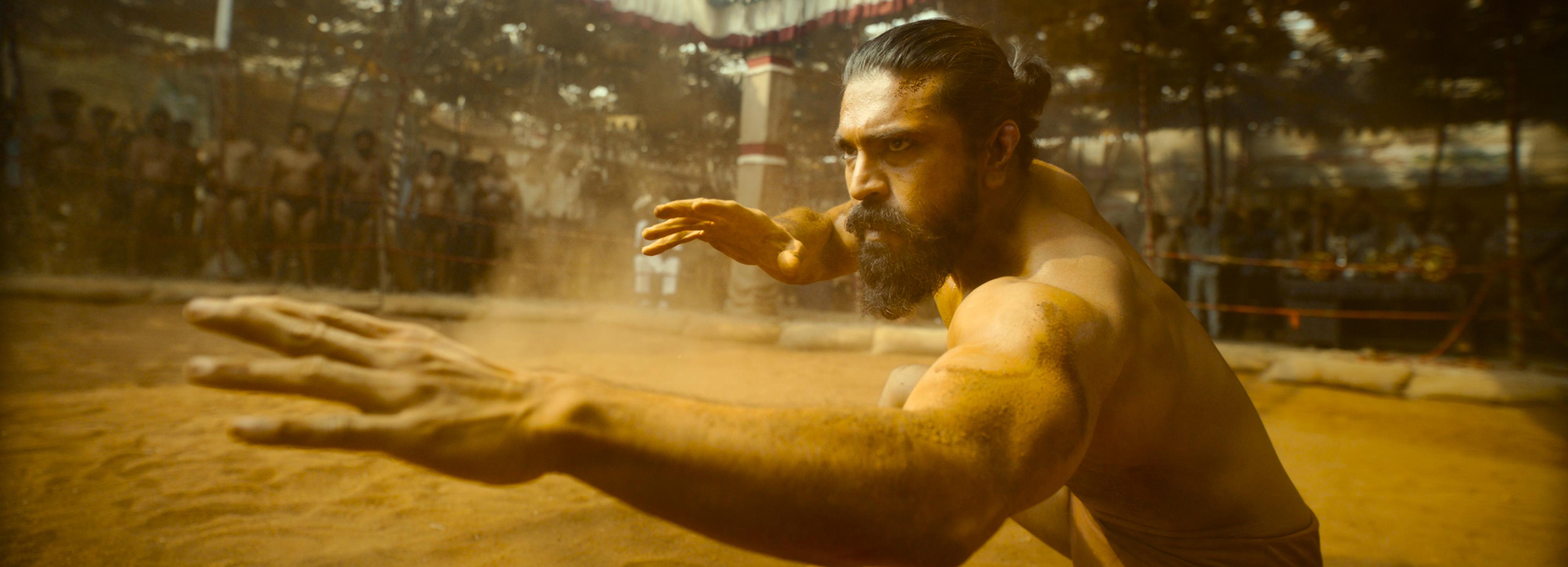
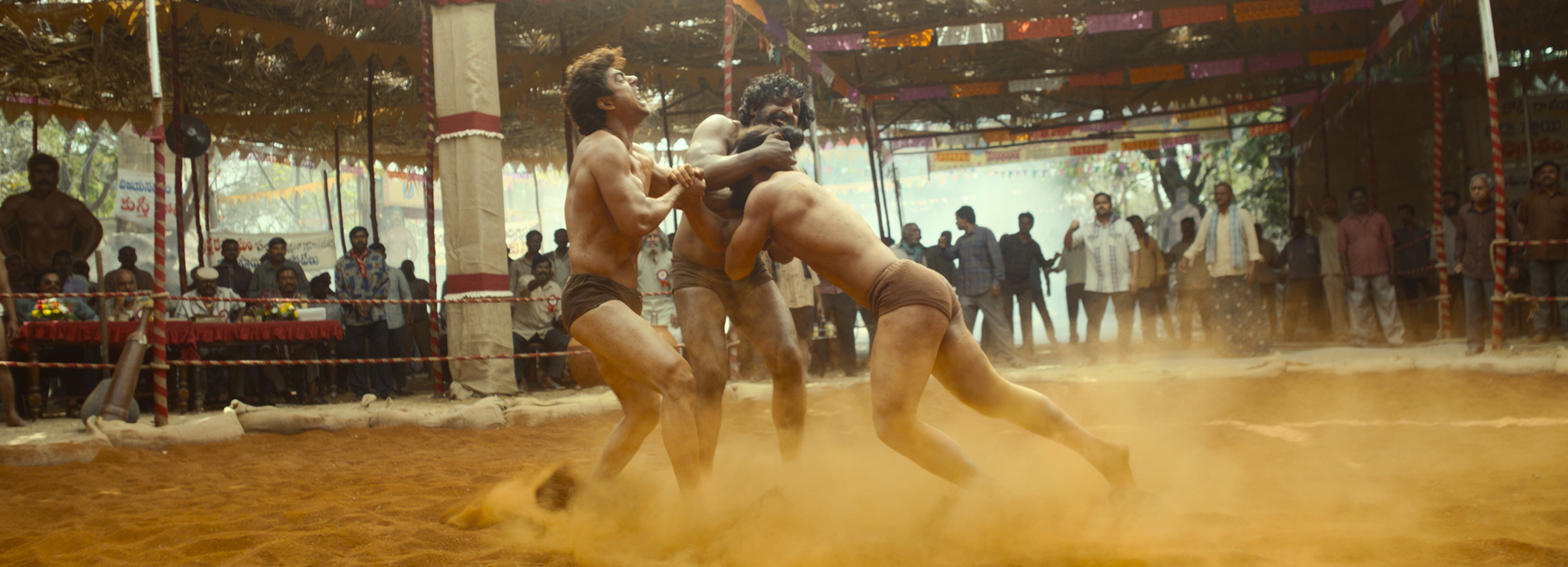
Then we had 20 minutes of sand wrestling. This was very tricky because the colour palette was highly analogous, almost monochromatic at times.
I wanted the audience to feel the grit of the sand and the heat of the pit. I used my same texture stack, reduced the halation a bit and also the cooler sub-tones. Then I played around with the Base Grade pivots and fall-offs. The idea was to keep the deepest blacks clean, the lower blacks to mid-tones more saturated with a very deep red tone, and then from the mid-tones towards the lower highlights we lose the saturation slightly but keep the highlights a bit warm. I then painted brightness with a very soft blurred paint layer on the characters while I kept the overall image half a stop darker. A second paint layer was then used to push the specular highlights on the skin of the wrestlers.
At the end of the match the wrestlers almost vanish in the dust from the sand pit. I asked the VFX vendor to give me a few dust plates with alpha layers so I could balance the dust continuity myself in Baselight with the Blend mode.
I utilised nearly every advanced tool in the Baselight arsenal.
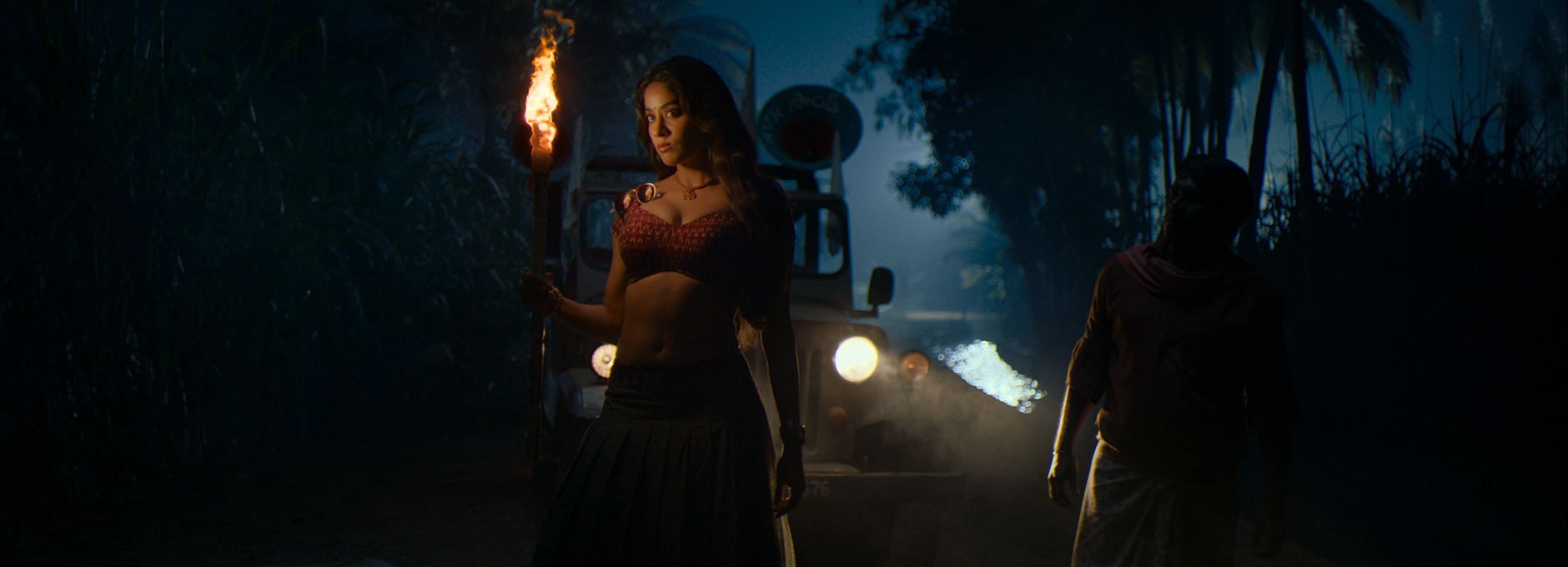
The Depth Keyer was a lifesaver for a day-for-night sequence so I could isolate the background behind the actors. There were just a few 360-degree panning shots with a lot of movement that I had to find my way around. I used that same depth channel with the Haze operator so I had stronger haze in the background and a nice fall-off towards the camera. I also integrated custom Halation across almost every scene: mostly a combo of a wider Halation for the overall image and a narrow spread for the highlight edges around characters with a strong back light.
Honestly though, the Flare tool was my secret weapon on this film. Randy shot on vintage Cooke Panchro lenses, which have those kind of ‘travelling’ flares. I used Baselight's Flare operator to rebuild those exact lens characteristics. You literally cannot tell the difference between the physical lens flares and the digital ones. I used them heavily for continuity and sophisticated relighting - casting light rays and anamorphic streaks across the frame, then masking out foreground elements like trees so the digital light realistically travelled ‘through’ the environment.
For roto work, while I used Segment Anything a few times, I primarily relied on the Paint operator. I prefer painting my mattes manually rather than using rigid masks; it feels more organic. We also used Flow Blend a few times to erase a 3-frame VFX shadow error, and of course the Face Wrapper paired with subtle texture smoothing and eye sharpening.
We immediately moved the entire conform over to Baselight’s native VFX versioning system, which completely eliminated the hassle of stacked, VFX layers on the timeline. The real challenge was training and disciplining the external VFX vendors to strictly follow global naming conventions with standardised incremental version numbers.
On the ground, the creative VFX supervision fell onto a tight unit: the film's VFX producer, the camera assistants, Randy’s son Aadith, and myself. In India, it is becoming more and more a part of a colourist’s job to step into the creative VFX supervision. Ultimately, in the grading suite we see what works and what doesn’t. I always try to fix things in Baselight first to take the workload away from the VFX teams, but every few days we had VFX reviews with one or more vendors and gave them our changes. Sometimes we were blending different versions as we liked parts of one or painted out render issues.
What did your mastering and delivery pipeline look like?
We had about 12 different cinema versions plus Satellite and OTT Dolby Vision, IMAX and a host of others; that was on top of five different Indian language versions.
We used tracks in the timeline for the different languages (e.g. smoking warnings) and we had around 650 additional VFX shots per language where billboards, signs, and so on had to be changed. IMAX also required Pan & Scan adjustments on specific shots, which we managed on an independent track. Between the language versions, aspect ratios, and localised VFX, our timeline was heavily multi-tracked.
Annapurna had updated their three Baselight systems to the latest Gen 8 hardware and also installed an additional Baselight TWO system just before the project. While I was grading the last reels and latest VFX, one colourist was working on the Dolby Cinema version, QC was happening on different Baselight systems, conforming and localisation was taking place on the conform machines and there were 24/7 renders. You need a really strong infrastructure and a good team to manage all of this at the same time.
The absolute backbone of the entire operation was our genius conformist, Madhu. He kept everything together when it came to conforming and rendering.
What would you advise upcoming colourists?
Frankly, it will get very difficult for beginners in the future but there is also a silver lining. You will always have high-profile, elite projects that demand human artistry and deep attention to detail (like long-form features and high-end advertising), and then you will soon have content either fully or partially produced by AI. In any industry the top people will get 10x faster and more efficient with the help of AI. This also means you don’t want to be at the low-end where AI can replace you. A simple match with a standard look on a low-budget show - that’s an AI task very soon.
I get a lot of messages from young people who want to assist me for a few weeks and then do their own thing. I don’t think that’s the right attitude. I had assistants who became successful colourists and they stayed in my team for a few years. You just need time to develop your skills and grow into bigger projects.
Also, from my perspective, we can’t really utilise a trainee for the first weeks and months until they are up to a certain base level and I like to build up my assistants from scratch. If they already come with some fancy YouTube knowledge I have to make them ‘unlearn’ the nonsense and that’s even more work.
So my advice is: assist, learn, make mistakes, learn more and grow slowly with every project.
We have a lot of projects lined up.
I am currently working on Jailer 2 and later this year I will start on my biggest project Varanasi, which will be released in April 2027.
Join In
If you want to participate in our MTC programme, we'd love to hear from you. Contact:
Alexa Maza
e: [email protected]
“The Flare tool was my secret weapon on this film. Randy shot on vintage Cooke Panchro lenses. I used Baselight's Flare operator to rebuild those exact lens characteristics. You literally cannot tell the difference between the physical lens flares and the digital ones.”
Details
Colourist: Andreas Brueckl
Role: Supervising Colourist
Web: Annapurna Studios
